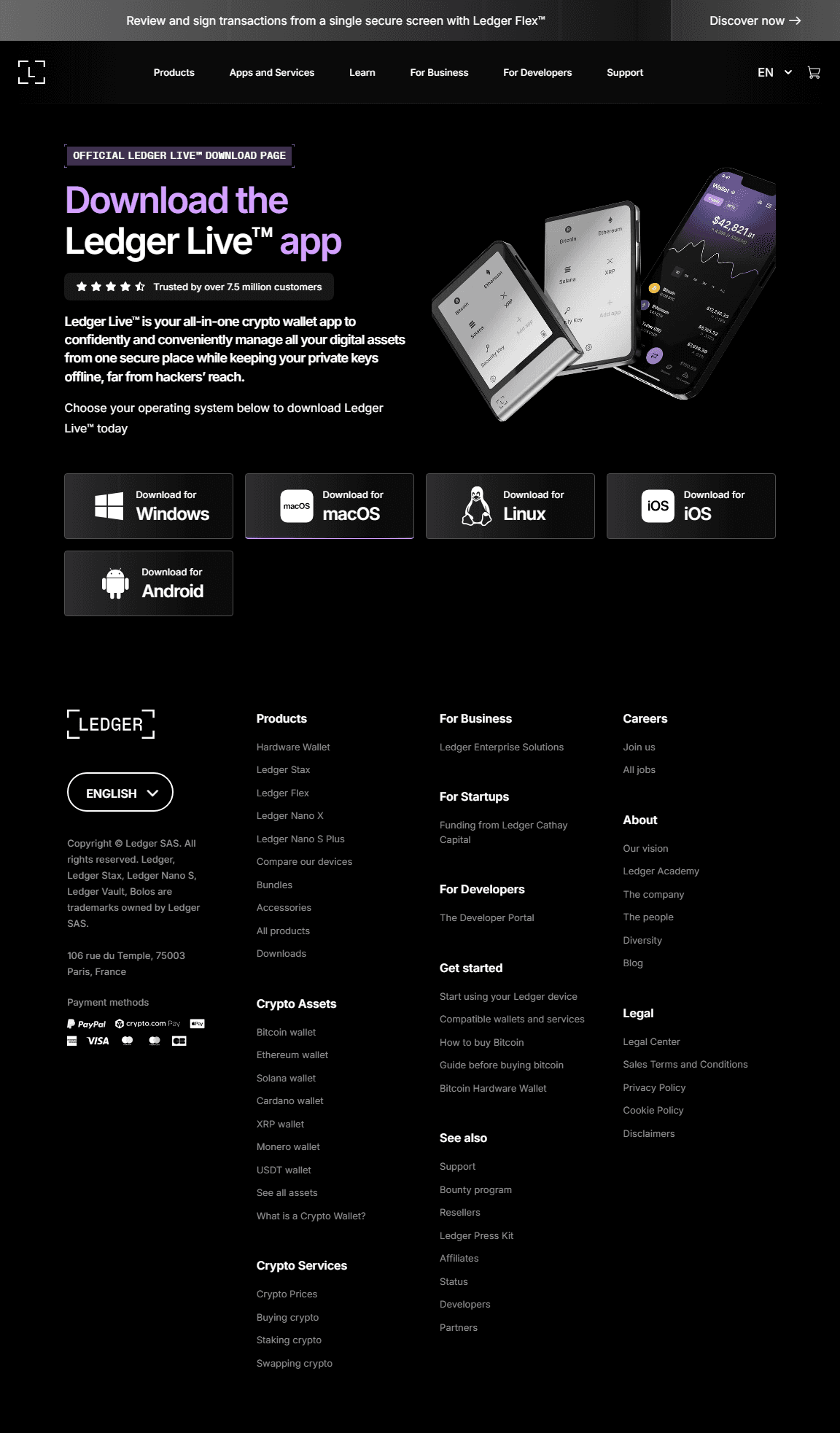
Ledger Live Login: A Detailed Guide to Accessing Your Crypto Portfolio Safely
When dealing with cryptocurrency, security must always come first. Ledger Live, the companion software for Ledger hardware wallets, is designed to give users a secure yet convenient way to manage their digital assets. Whether you're a beginner or a daily crypto trader, everything you do inside Ledger Live begins with its login process. This process is not like traditional sign-ins, because it relies on hardware authentication rather than cloud-based credentials. Understanding how Ledger Live login works will help you manage and protect your assets more confidently.
This guide explains what Ledger Live login really means, how to navigate each step, common issues you might encounter, and best practices for maintaining strong security.
What Is Ledger Live?
Ledger Live is the official application for managing Ledger hardware wallets and the cryptocurrencies stored on them. It serves as a unified interface where users can:
Add accounts for different blockchains
View balances and transaction histories
Perform transactions
Track overall portfolio value
Update hardware wallet firmware
Install and manage crypto apps on the device
The app works on desktops and mobile devices, and supports both of Ledger’s main hardware wallets. Though Ledger Live looks like a typical software dashboard, the login process is unique because it requires interaction with your hardware device.
How Ledger Live Login Differs From Standard Logins
Most digital platforms use email and passwords. Ledger Live rejects this approach entirely. Instead of storing information online, Ledger Live depends on your physical hardware wallet to authenticate your identity.
This approach eliminates many vulnerabilities found in traditional systems. No stored password means:
No password database to be hacked
No recovery email to be compromised
No risk of phishing for login credentials
You only log in by connecting your Ledger device and verifying yourself directly on the hardware.
What Ledger Live Login Actually Involves
The Ledger Live login process includes several layers, each designed to prevent unauthorized access:
Opening the Ledger Live application
Unlocking Ledger Live with an optional app password
Connecting your Ledger hardware wallet
Entering your PIN on the hardware device
Approving the connection inside the device
After completing these steps, the app becomes fully functional, enabling you to send, receive, or manage crypto assets.
Step-by-Step Ledger Live Login Guide
Step 1: Start Ledger Live on Your Device
Begin by opening Ledger Live on your computer or smartphone. If you’ve enabled the optional password lock feature inside the app, you’ll be prompted to enter your password before seeing the dashboard. This password prevents others who use your device from viewing your crypto information.
If password lock has not been activated, Ledger Live opens immediately.
Step 2: Connect Your Ledger Hardware Wallet
Next, plug in your Ledger Nano device using the appropriate USB cable. If you own a Ledger Nano X, you may choose to pair it through Bluetooth on your phone instead of using a cable.
Once connected, the hardware wallet will automatically power on and ask you to enter your PIN.
Step 3: Enter Your PIN on the Ledger Device
Your PIN is a vital part of the login process.
It ensures the device cannot be used without your authorization.
After several incorrect attempts, the device resets itself for protection.
If a reset happens, you can restore your accounts using your recovery phrase.
Correctly entering your PIN unlocks your hardware device and allows Ledger Live to communicate with it.
Step 4: Approve Ledger Live Access
Ledger Live will require your approval to interact with the hardware device. On the Ledger’s screen, you’ll be prompted to authorize this communication. Once approved, the app can access the device’s internal apps and interact with your crypto accounts.
You may also need to approve specific actions, such as:
Opening the Manager
Installing a blockchain app
Performing firmware updates
Each approval ensures only authorized operations take place.
Step 5: Access Your Portfolio and Accounts
After your Ledger device is unlocked and communication is approved, you are effectively logged into Ledger Live. You can now:
View your portfolio overview
Add new crypto accounts
Send cryptocurrency
Receive funds through address generation
Track real-time balances
Manage and update blockchain apps
Explore staking or swapping options for supported tokens
Despite being "logged in," remember that all critical actions—especially sending crypto—must still be confirmed on your hardware device.
Why Hardware-Based Login Is More Secure
The security of Ledger Live login is rooted in several important principles:
1. Private Keys Stay Offline
Your private keys never leave the hardware wallet, even during login. Ledger Live only displays information and prepares transactions—it does not have direct access to your keys.
2. No Passwords Stored on Servers
Traditional platforms store user credentials in databases that can be breached. Ledger Live has no centralized account system, eliminating this risk entirely.
3. Every Transaction Requires Physical Approval
Even if someone gains access to your computer or smartphone, they cannot move your crypto without having your Ledger device in hand and knowing your PIN.
4. Hardware Protections
Ledger devices include secure-element chips designed to protect sensitive data from physical extraction and tampering.
Common Ledger Live Login Issues and How to Fix Them
Even with an efficient system, users sometimes face login difficulties. Most are easy to fix with basic troubleshooting.
1. Ledger Device Not Detected
If Ledger Live doesn’t detect the device:
Reconnect the USB cable
Try a different cable or port
Make sure the device is unlocked with your PIN
Restart the Ledger Live application
Ensure your device's firmware is up to date
Often, a faulty cable or outdated software causes connection problems.
2. Ledger Live Password Not Accepted
If you enabled Ledger Live’s password lock and it doesn’t accept your password:
Check for typing errors, especially if you use symbols
Ensure your keyboard language hasn’t changed
Reset Ledger Live password by reinstalling the application
Reinstallation does not affect your crypto, as keys remain stored in the hardware wallet.
3. Bluetooth Connection Issues (Nano X Users)
If you can’t connect through Bluetooth:
Toggle Bluetooth on your phone
Remove the previous pairing and reconnect
Move closer to your device
Remove potential interference sources
Bluetooth issues are common but easy to resolve.
4. Stuck on "Allow Ledger Manager"
If your Ledger device freezes at a confirmation prompt:
Disconnect and reconnect the device
Restart Ledger Live
Try approving the prompt again
Update firmware if available
This often happens during app installation or updates.
5. Ledger Live Freezes During Login
If the application becomes unresponsive:
Close and reopen it
Restart your computer or phone
Update Ledger Live to the newest version
Clear cache from the Ledger Live settings
Outdated software is a frequent cause of freezing or lag.
Best Practices for Safe Ledger Live Login
Using Ledger Live securely involves following good habits. Here are essential practices:
1. Keep Your Recovery Phrase Offline
Never type your recovery phrase into Ledger Live or any online form. Store it safely on paper or metal, and keep it out of public view.
2. Enable Password Lock in Ledger Live
This prevents unauthorized individuals from viewing your portfolio if they access your device.
3. Update Software and Firmware Regularly
Updates often include security improvements and new features that affect login flow.
4. Verify Every Transaction on the Device
Always double-check the address, amount, and network displayed on the Ledger device screen. This prevents malware from redirecting transactions.
5. Avoid Using Untrusted Devices
Although private keys remain secure, using Ledger Live on compromised devices can increase exposure to phishing or manipulation attempts.
Why Ledger Live Login Matters in Modern Crypto Management
The login process for Ledger Live is designed to give you maximum control and security over your digital assets. Because cryptocurrencies operate without intermediaries, users are responsible for protecting their own holdings. Ledger’s hardware-based login ensures that even if your computer or smartphone becomes compromised, your private keys remain safe.
Ledger Live combines usability with world-class security by:
Requiring physical authentication
Keeping keys offline
Rejecting cloud-based accounts
Enforcing on-device verification
This makes Ledger Live one of the safest ways to manage cryptocurrency portfolios today.