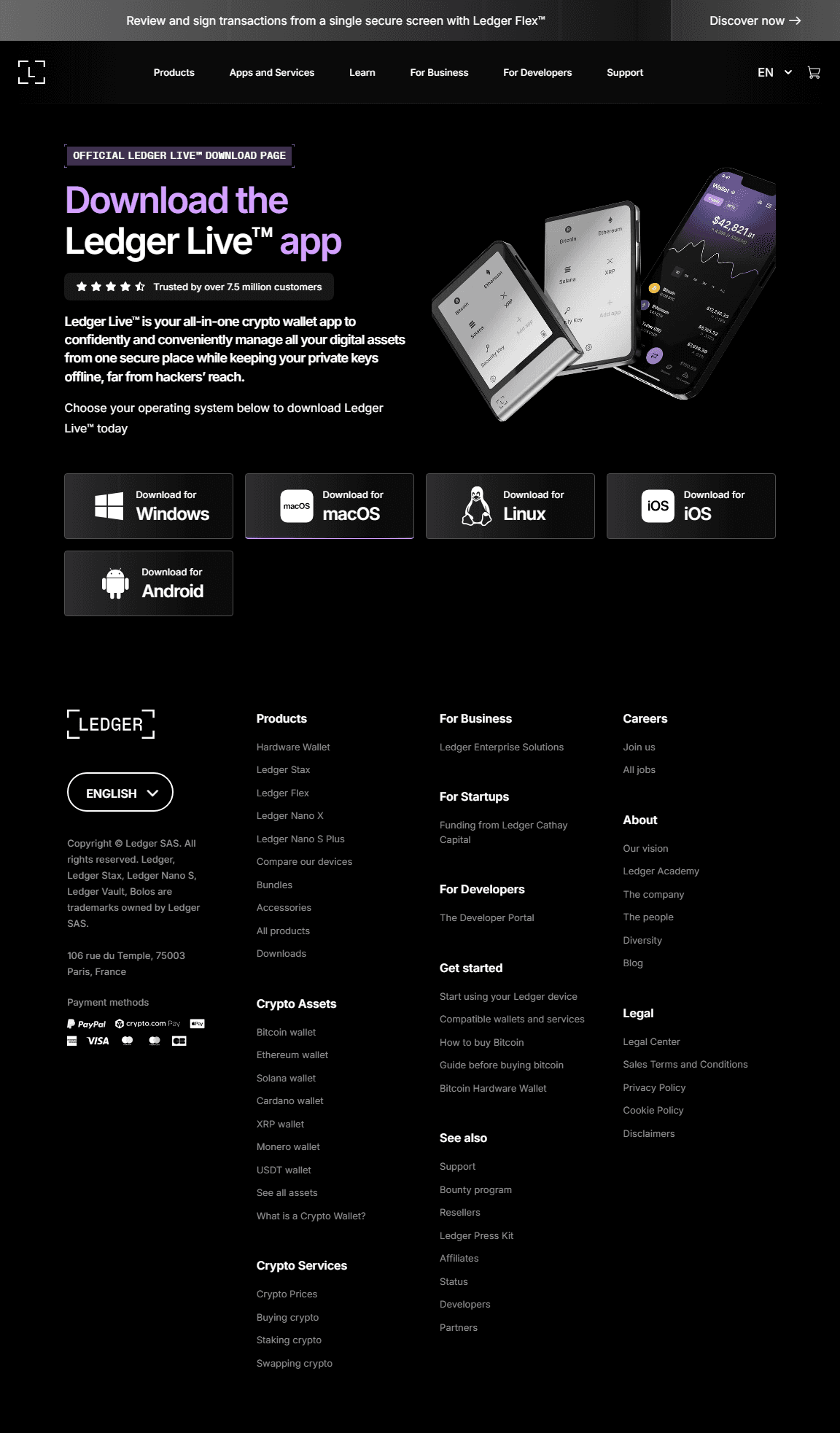
Ledger Live Login: A Comprehensive Guide to Secure Access and Crypto Management
Cryptocurrency holders today want tools that combine convenience with strong security. Ledger Live is one of the leading applications designed for managing digital assets alongside a Ledger hardware wallet. While many apps rely on simple username-and-password access, Ledger Live takes a very different approach. Its login process is built around your hardware wallet, ensuring your private keys remain offline and protected at all times.
This guide explores how the Ledger Live login process works, what you can expect during setup, common issues, and best practices for keeping your assets secure.
Understanding the Role of Ledger Live
Ledger Live serves as the official interface for Ledger hardware wallets. It allows you to manage thousands of cryptocurrencies from one application while keeping your private keys inside your Ledger device. The software works on computers and smartphones, giving users flexibility to check balances, send assets, stake tokens, and install apps for different blockchains.
Unlike online exchanges or web wallets, Ledger Live does not operate through a conventional login system. There are no email accounts or cloud-based passwords. Instead, your Ledger device acts as the key that unlocks functionality within Ledger Live.
What “Ledger Live Login” Really Means
Because Ledger Live does not function like traditional applications, the term “login” refers to the steps needed to access your crypto management dashboard. These steps generally include:
Opening Ledger Live on your device
Unlocking the app with an optional password
Connecting your Ledger hardware wallet
Entering your PIN on the hardware device
Approving communication between the device and the app
Only after these processes are complete can you access your crypto accounts and perform transactions.
This layered approach significantly reduces the likelihood of unauthorized access because it ties the login process to a physical device—your Ledger wallet.
The Step-by-Step Ledger Live Login Process
Step 1: Open the Ledger Live Application
Start by launching Ledger Live on your computer or smartphone. If you have enabled the password lock feature within the app, you must enter your chosen password before you can access the dashboard. This optional password protects your portfolio information from anyone else who might use the same device.
If no password lock is enabled, Ledger Live will take you directly to the interface.
Step 2: Connect Your Ledger Hardware Wallet
To complete the login process, Ledger Live must communicate with your Ledger device. If you are using a Ledger Nano S Plus or Ledger Nano S, connect it using a USB cable. If you are using the Ledger Nano X, you can connect via USB or Bluetooth depending on your device.
Once the connection is established, your Ledger device will turn on and prompt you for your PIN.
Step 3: Enter Your PIN Code on the Ledger Device
The PIN is the first layer of hardware-level security. Without this code, the Ledger device remains locked and unusable.
Important points about the PIN:
It is required every time the device is powered on.
Too many incorrect attempts will reset the device.
Even if the device resets, your assets can be restored with your recovery phrase.
Entering the correct PIN unlocks the Ledger wallet and allows Ledger Live to interact with it.
Step 4: Approve Ledger Live Access on Your Device
Ledger Live may request permission to access specific features on your device. You will need to approve these requests using the buttons on your Ledger wallet. This step ensures that no unauthorized software or malicious program can access your wallet without your knowledge.
Approvals may include:
Allowing Ledger Live to open the Manager tab
Confirming firmware updates
Verifying connections
Approving installation of blockchain apps
Once you grant the required permissions, Ledger Live becomes fully functional.
Step 5: Access Your Accounts and Portfolio
At this point, your Ledger wallet is connected and authenticated. In Ledger Live, you can now:
View all your cryptocurrency balances
Add or remove blockchain accounts
Send and receive digital assets
View your portfolio performance
Swap supported crypto assets
Stake eligible cryptocurrencies
Review past transactions
Install blockchain apps on the hardware wallet
Although Ledger Live lets you manage a wide variety of cryptocurrencies, it cannot perform any sensitive operation unless you confirm it physically on your Ledger device.
Why Ledger Live Login Is More Secure Than Traditional Logins
Traditional login systems use usernames, passwords, and sometimes two-factor authentication. Though helpful, these methods can still be vulnerable to phishing attacks, data leaks, and brute-force guessing.
Ledger Live avoids these issues by using hardware authentication.
1. No Passwords Stored Online
Since Ledger Live does not rely on cloud-based accounts, there is no central database for hackers to target. Your access is tied to the hardware device in your possession.
2. Private Keys Never Leave the Hardware Wallet
Even during login, your private keys remain locked inside the secure element chip of the Ledger device. Ledger Live interacts with blockchain networks, but it never handles your keys directly.
3. Mandatory Physical Confirmation
Every transaction requires you to manually verify and approve details on the Ledger device. This prevents malware on your computer from initiating unauthorized activity.
4. Multiple Layers of Login Protection
Access requires:
The Ledger device
The PIN
Optional Ledger Live password
On-device confirmation
This multi-factor approach drastically increases security.
Common Ledger Live Login Problems and How to Fix Them
Even though Ledger Live and Ledger devices are designed for simplicity, users occasionally experience issues during login. Here are the most common problems and solutions.
1. Ledger Device Not Recognized
If Ledger Live cannot detect your device:
Try a different USB cable or port
Reopen Ledger Live
Restart your computer
Unlock your Ledger device first
Make sure your device is updated
Faulty cables are one of the most common causes of recognition issues.
2. Incorrect PIN Entries
If you enter the wrong PIN too many times, the device resets. In this case:
Restore your wallet using the 24-word recovery phrase
Reinstall any apps you had before
Your crypto remains safe because it is stored on the blockchain, not the device itself.
3. Ledger Live Stuck on Loading
If Ledger Live freezes during login:
Close and reopen the app
Update Ledger Live
Clear cache data
Check for system updates on your device
Software updates often resolve compatibility issues.
4. Bluetooth Pairing Issues (Nano X)
If Ledger Live cannot connect via Bluetooth:
Delete previous pairing
Restart both devices
Move closer to the phone
Turn off nearby devices that may interfere
Bluetooth issues are typically temporary and easy to resolve.
5. “Allow Ledger Manager” Not Responding
If your device gets stuck waiting for approval:
Reconnect the cable
Check that the device is unlocked
Restart Ledger Live
Try using a different USB port
This issue often appears during firmware updates or app installations.
Best Practices for a Smooth and Secure Ledger Live Login Experience
Ledger provides powerful security tools, but users must still follow best practices. Here’s how to maximize security during login and throughout your crypto experience:
1. Protect Your Recovery Phrase
Your 24-word recovery phrase is the ultimate key to your crypto. Always keep it offline and never store it digitally.
2. Enable Ledger Live Password Lock
This adds a second layer of protection to your portfolio view and keeps prying eyes away.
3. Keep Firmware and Apps Updated
Updates improve security, fix bugs, and ensure smooth login functionality.
4. Avoid Public Computers or Insecure Networks
Even though your keys remain offline, using trusted devices reduces the risk of malware exposure.
5. Double-Check All Device Prompts
Always verify that transaction information displayed on your Ledger device matches what appears in Ledger Live.
Why Ledger Live Login Matters for Crypto Security
The Ledger Live login system is built to protect users in a digital environment full of threats. By tying access to a hardware wallet, Ledger significantly minimizes risk and gives you complete control over your crypto. This system provides:
Offline key storage
Strong authentication
User-friendly asset management
Protection from phishing and malware
For long-term crypto investors, Ledger Live and its secure login process offer a safe, reliable, and efficient way to manage digital assets.